
Pregnancy, breastfeeding, weight changes, genetics and time all affect the breasts in the same way: the skin stretches, the tissue descends and the nipples begin to point downward. A mastopexy, or breast lift, restores a higher, firmer and more youthful breast shape, with or without implants.
This guide explains what a breast lift is, how surgeons decide whether you need one, which incision pattern fits your degree of sagging, whether implants should be added, what recovery looks like in Miami’s heat and humidity, and how long results last. It reflects the standards followed by board-certified plastic surgeons.
Quick answer
A mastopexy (breast lift) is surgery that removes excess skin, reshapes the breast tissue and raises the nipple and areola to correct sagging, without significantly changing cup size. It usually takes 2–3 hours under general anesthesia. Most patients return to desk work in 1–2 weeks, avoid heavy lifting and strenuous exercise for several weeks, and see final results at 3–6 months, with scars fading over 12–18 months. Implants can be added at the same time if you also want more volume.
Not sure whether you need a lift, implants or both? In a free consultation, board-certified plastic surgeon Dr. Orlando Llorente will measure your breast position and recommend the approach that fits your body and goals.
What patients say about Dr. Llorente
Read all reviews on Google- ★★★★★
Super professional, calm, and made me feel really comfortable from the beginning.
— Veronica S. Google review - ★★★★★
Dr. Llorente is a miracle worker. I felt heard and so confident in him.
— Tiffany G. Google review - ★★★★★
The results are beyond what I had hoped for, and I feel more confident than ever.
— Noemi C. Google review - ★★★★★
I felt totally safe and confident going into surgery.
— Veronica S. Google review - ★★★★★
No complications and healing very well!
— Tiffany G. Google review - ★★★★★
His expertise, professionalism, and genuine care for his patients truly set him apart.
— Noemi C. Google review
- ★★★★★
I call him an artist… only 6 weeks post op my scars are barely noticeable.
— Sheyla B. Tummy tuck patient - ★★★★★
My experience was beyond amazing.
— Yanisel M. Breast augmentation patient - ★★★★★
He perfectly understood what I wanted.
— Natacha M. Plastic surgery patient - ★★★★★
Excellent care and incredible results!!
— Jany D. Breast augmentation patient - ★★★★★
The best plastic surgeon in Dade.
— Daimarys H. Plastic surgery patient - ★★★★★
I am delighted with my results.
— Majile A. Breast augmentation patient
Important Note
A breast lift is personal. The right incision, the decision about implants and your recovery plan all depend on your anatomy, goals and health, which is why an in-person examination by a board-certified plastic surgeon is essential.
What Is a Mastopexy (Breast Lift)?
A mastopexy is a surgical procedure that lifts and reshapes sagging breasts by removing excess skin, tightening the surrounding tissue and moving the nipple and areola to a higher position. It restores shape and position rather than adding volume.
- Raises the breast and nipple to a more youthful height
- Removes stretched, excess skin
- Reshapes flattened or elongated breast tissue
- Can reduce enlarged or stretched areolas
A breast lift does not make the breasts significantly larger or smaller. Patients who also want more fullness, especially in the upper breast, often combine a lift with implants, while patients with large, heavy breasts usually need a breast reduction, which includes a lift.
How Do I Know If I Need a Breast Lift?
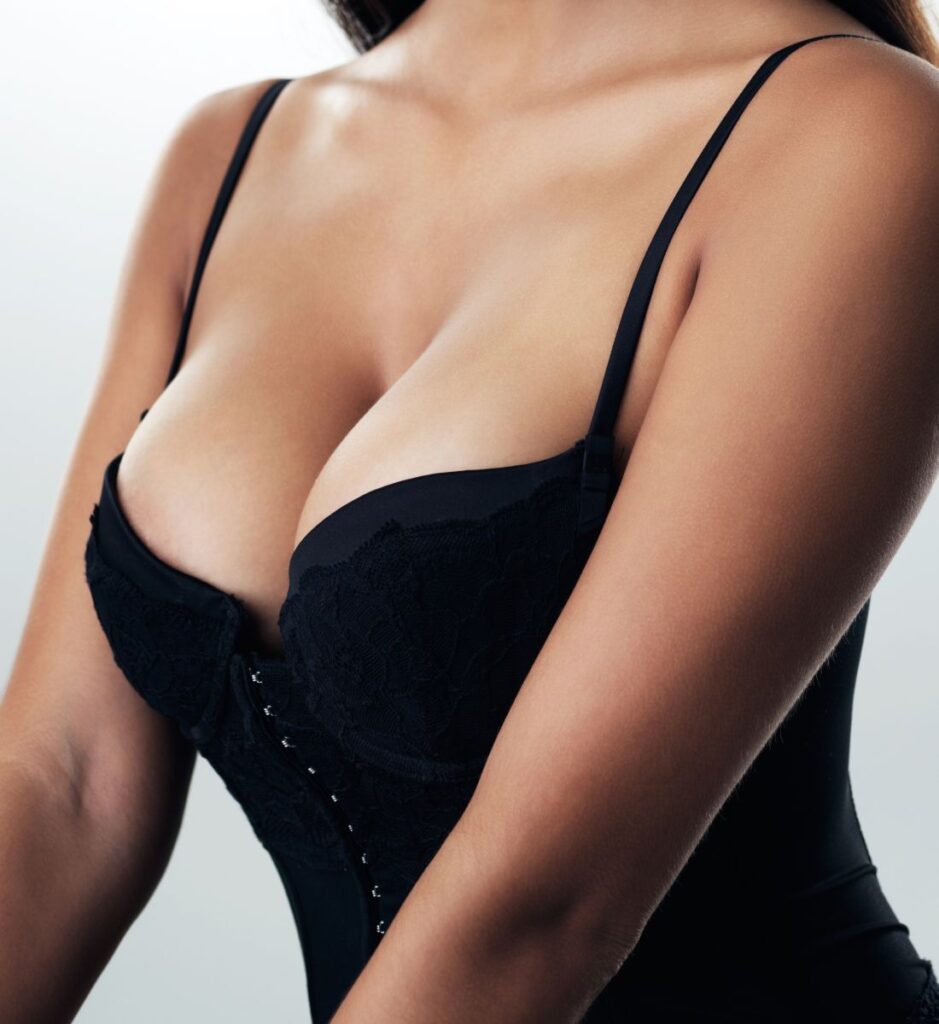
You may need a breast lift if your nipples sit at or below the breast crease, point downward, or if most of your breast tissue hangs below the fold. Surgeons measure this sagging, called ptosis, to decide whether a lift, implants or both will give the best result.
- Nipples at or below the breast crease
- Nipples or areolas pointing downward
- Breasts that look flat or empty in the upper half
- Stretched skin or enlarged areolas
- One breast noticeably lower than the other
A simple self-check is to look at where your nipple sits relative to the crease under your breast while standing. If the nipple is at or below that crease, implants alone usually cannot lift the breast enough, and a mastopexy is needed.
What Are the Grades of Breast Sagging (Ptosis)?
Plastic surgeons commonly grade breast sagging from mild to severe based on where the nipple sits relative to the breast crease. The higher the grade, the more extensive the lift and incision needed.
| Grade | Nipple Position | Typical Approach |
|---|---|---|
| Grade I (mild) | At the level of the breast crease | Crescent or periareolar lift, or implants alone in some cases |
| Grade II (moderate) | Below the crease but above the lowest part of the breast | Vertical (lollipop) lift |
| Grade III (severe) | At the lowest point of the breast, pointing down | Anchor (Wise-pattern) lift |
| Pseudoptosis | Nipple at a normal height, but tissue has settled below the crease | Often implants or a limited lift |
This classification, often called the Regnault scale, is one of the tools your surgeon uses at consultation, together with skin quality, breast volume and your goals.
What Is the Difference Between a Breast Lift, Breast Augmentation and Breast Reduction?
A breast lift corrects sagging and nipple position, breast augmentation adds volume with implants, and breast reduction removes weight and volume while also lifting the breast. Many patients combine a lift with implants to restore both position and fullness.
| Procedure | Main Goal | Changes Cup Size? | Lifts the Breast? | Insurance |
|---|---|---|---|---|
| Breast lift (mastopexy) | Raise and reshape sagging breasts | Not significantly | Yes | Usually cosmetic |
| Breast augmentation | Add volume and fullness | Larger | No (minimal) | Cosmetic |
| Lift with implants (augmentation-mastopexy) | Restore position and fullness | Larger | Yes | Cosmetic |
| Breast reduction | Remove weight and relieve symptoms | Smaller | Yes, always | May be covered if medically necessary |
What Incision Types Are Used for a Breast Lift?
The main incision options are the crescent, periareolar (donut), vertical (lollipop) and anchor (Wise) patterns. Mild sagging needs the smallest incisions, while severe sagging usually needs a lollipop or anchor lift for a lasting result.
- Crescent: a small half-moon above the areola for very mild lifts
- Periareolar (donut): around the areola for mild sagging
- Vertical (lollipop): around the areola and straight down for moderate sagging
- Anchor (Wise): adds a scar in the breast crease for severe sagging
| Incision | Scar Location | Best For |
|---|---|---|
| Crescent | Upper edge of the areola | Very mild lift, small nipple adjustment |
| Periareolar (donut) | Around the areola | Mild sagging, reducing areola size |
| Vertical (lollipop) | Around the areola and down the lower breast | Moderate sagging; most common modern lift |
| Anchor (Wise) | Around the areola, down the breast and along the crease | Severe sagging or large amounts of excess skin |
The goal is always the shortest scar that will produce a durable, well-shaped lift. Choosing an incision that is too small for the amount of sagging can lead to a flattened shape or early recurrence.
Should I Get a Breast Lift With or Without Implants?
Choose a lift alone if you are happy with your breast size but not its position. Add implants if you have also lost volume, especially in the upper breast, and want a fuller look. Combining both in one operation is common and is called augmentation-mastopexy.
- Lift alone: restores position and shape with your own tissue
- Lift with implants: adds upper-breast fullness and projection
- Combined surgery means one anesthesia and one recovery
- Implants require long-term monitoring and are not lifetime devices
At Epic Plastic Surgery, Dr. Orlando Llorente evaluates your tissue, skin quality and goals to recommend whether a lift alone, implants alone or the combined procedure will give you the most natural, balanced result.
What Happens During Breast Lift Surgery?
A breast lift is usually performed under general anesthesia and takes about 2–3 hours. The surgeon removes excess skin, reshapes the breast tissue, moves the nipple and areola higher and closes the incisions with layered sutures.
On the day of surgery, Dr. Llorente reviews your plan and marks the incisions while you are standing, so the new nipple position and breast shape are designed with gravity in mind. Most patients go home the same day with a supportive surgical bra and detailed recovery instructions.
What Is the Breast Lift Recovery Timeline?
Most patients rest for several days, return to desk work in 1–2 weeks, avoid heavy lifting and strenuous exercise for several weeks, and resume full activity after surgeon clearance. Swelling resolves gradually, and the breast shape settles over 3–6 months.
- Days 1–3: soreness and tightness; short walks encouraged
- Weeks 1–2: return to desk or remote work for many patients
- Several weeks: no heavy lifting, reaching overhead or chest exercise
- After clearance: full workouts, swimming and side sleeping
- Months 3–6: final shape and position
| Stage | What to Expect | Activity Guidance |
|---|---|---|
| First 72 hours | Tightness, soreness, fatigue | Rest, short walks, surgical bra at all times |
| Week 1 | Discomfort improving, swelling and bruising | Light activity, sleep on your back, no lifting |
| Weeks 1–2 | Energy returning | Many return to desk work |
| Weeks 2–6 | Swelling decreasing | Walking and lower-body activity; no chest exercise |
| After clearance (often 6 weeks) | Healing well established | Full exercise, swimming, regular bras as approved |
| Months 3–6 | Breasts soften and settle | Final shape becomes visible |

When Can I Sleep on My Side After a Breast Lift?
Most surgeons recommend sleeping on your back with your upper body slightly elevated for the first several weeks, then moving to side sleeping after your surgeon approves it, often around 4–6 weeks. Pressure on healing breasts too early can increase discomfort and strain incisions.
If you naturally sleep on your side, placing pillows on both sides of your body can help you stay on your back. Stomach sleeping usually takes the longest to become comfortable.
How Do I Care for Breast Lift Incisions in Miami's Heat and Humidity?
In Miami's warm, humid climate, keep incisions clean and dry, change damp bras promptly, stay in air conditioning during the hottest hours, protect scars from the sun for at least a year, and avoid pools, the ocean and hot tubs until your surgeon confirms the incisions are fully healed.
- Keep incisions dry, especially under the breast fold
- Wear a clean, breathable surgical or soft cotton bra
- Avoid direct sun on scars; use clothing or SPF 30+ once healed
- No swimming until your surgeon clears you
- Stay well hydrated
Sun exposure can darken healing scars permanently, so scar protection matters more in South Florida than in cooler climates. If you are recovering during hurricane season, from June through November, plan for reliable air conditioning and extra supplies.
What Do Breast Lift Scars Look Like Over Time?
Breast lift scars start pink or red and slightly raised, then flatten, soften and fade to thin, pale lines over about 12 to 18 months. They are permanent but are usually hidden by bras and most swimwear.
| Time After Surgery | Typical Scar Appearance |
|---|---|
| First 6 weeks | Pink to red, firm, slightly raised |
| 2–6 months | Most noticeable; may look darker |
| 6–12 months | Softer, flatter and lighter |
| 12–18 months | Flat, pale and mature for most patients |
Scars around the areola often blend especially well because they sit at the natural color change between the areola and the breast skin.
How Long Do Breast Lift Results Last?
A breast lift lasts many years, but it does not stop aging. Gravity, pregnancy, breastfeeding and significant weight changes can cause some sagging to return over time. Maintaining a stable weight and wearing supportive bras help protect your results.
Many women choose to wait until they have finished having children, because pregnancy and breastfeeding can stretch the breast again. A lift can still be performed earlier if sagging bothers you now; just know a future touch-up may be needed.
Will a Breast Lift Affect Nipple Sensation or Breastfeeding?
Temporary changes in nipple sensation are common after a breast lift and usually improve over several months. Because the nipple usually stays attached to the underlying tissue, many women can still breastfeed afterward, although it cannot be guaranteed.
Is a Breast Lift Covered by Insurance?
A breast lift is usually considered cosmetic and is not covered by health insurance. Exceptions can include reconstructive surgery to create symmetry after breast cancer treatment. If heavy breasts cause pain, a breast reduction, which includes a lift, may qualify for coverage instead.
How Much Does a Breast Lift Cost in Miami?
The cost of a breast lift depends on the technique, whether implants are added, anesthesia and facility fees. Epic Plastic Surgery provides a personalized quote at your consultation, with financing available through CareCredit and PatientFi.
What Are the Risks of a Breast Lift?
Risks include bleeding, infection, delayed wound healing, scarring, asymmetry, changes in nipple sensation, loss of some of the lift over time and anesthesia risks. Adding implants introduces implant-related risks such as capsular contracture or rupture.
Choosing a surgeon certified by the American Board of Plastic Surgery, not smoking and following your recovery instructions carefully are the most effective ways to reduce risk.
How Do I Choose a Breast Lift Surgeon in Miami?
Choose a plastic surgeon certified by the American Board of Plastic Surgery who performs breast lifts regularly, shows real before-and-after photos of patients with a similar starting point, explains incision options clearly and operates in an accredited facility.
- Verify board certification with the American Board of Plastic Surgery
- Review before-and-after photos with similar anatomy to yours
- Ask which incision the surgeon recommends and why
- Ask who performs the surgery and how follow-up is handled
- Make sure you feel heard and never rushed
Dr. Orlando Llorente is certified by the American Board of Plastic Surgery, fellowship-trained in aesthetic and breast surgery at Northwestern Memorial Hospital in Chicago and personally performs every procedure at Epic Plastic Surgery in Coconut Grove.
Key Takeaways
- A mastopexy lifts and reshapes sagging breasts and raises the nipple without significantly changing cup size.
- Surgeons grade sagging (ptosis) by nipple position; more sagging needs a lollipop or anchor incision.
- Implants can be added in the same surgery if you also want more upper-breast fullness.
- Most patients return to desk work in 1–2 weeks; final shape appears at 3–6 months and scars fade over 12–18 months.
- A breast lift is usually cosmetic; a breast reduction, which includes a lift, may qualify for insurance coverage.
Frequently Asked Questions
What is the difference between mastopexy and a breast lift?
There is no difference. Mastopexy is the medical name for breast lift surgery.
Does a breast lift make breasts smaller?
Not significantly. Removing excess skin and reshaping the breast can make breasts look slightly more compact, but cup size usually stays about the same unless tissue is removed in a reduction.
Can implants alone fix sagging breasts?
Only very mild sagging. If your nipples sit at or below the breast crease, implants alone usually cannot lift the breast enough, and a mastopexy is needed.
How long does a breast lift take?
Most breast lifts take about 2–3 hours under general anesthesia; adding implants can add time.
When can I go back to work after a breast lift?
Most patients return to desk or remote work in 1–2 weeks. Physically demanding jobs need more time.
When can I exercise after a breast lift?
Walking is encouraged right away. Strenuous exercise, chest workouts and heavy lifting usually wait several weeks, until your surgeon clears you.
When can I swim after a breast lift in Miami?
Only after your surgeon confirms your incisions are fully healed, often around 4–6 weeks or later.
Should I have a breast lift before or after having children?
Many women wait until they have finished having children, because pregnancy and breastfeeding can cause sagging to return. A lift can be done earlier, but a future revision may be needed.
Will breast lift scars be visible?
Scars are permanent but usually fade to thin, pale lines over 12–18 months and are typically hidden by bras and most swimwear.
Is a breast lift covered by insurance?
Usually not, because it is considered cosmetic. A breast reduction, which includes a lift, may be covered when it is medically necessary.
Sources and Further Reading
- American Society of Plastic Surgeons – Breast Lift: procedure overview, candidates, risks and recovery.
- U.S. Food and Drug Administration – Breast Implants: safety information for lifts combined with implants.
- American Board of Plastic Surgery: verifying a surgeon’s board certification.
- Regnault P. Breast ptosis: definition and treatment. Clinics in Plastic Surgery. 1976;3(2):193-203.
Medical disclaimer:
This article is for educational purposes only and does not replace personalized medical advice, diagnosis or treatment. Every patient’s anatomy, health and recovery are different. Always follow the instructions of your own plastic surgeon.
Please note: Reading this article does not create a doctor–patient relationship. If you think you are having a medical emergency, call 911.
Your next step
Schedule Your Breast Lift Consultation in Miami
If sagging, stretched skin or downward-pointing nipples make you feel less confident, the first step is a private consultation with a board-certified plastic surgeon. Dr. Orlando Llorente will measure your breast position, explain your incision options, discuss whether implants make sense and give you a personalized quote and recovery plan.
Learn more on our breast lift page, compare breast lift vs. breast augmentation, and schedule your free consultation in Coconut Grove or virtually.

About the medical reviewer
Orlando Llorente, MD
Dr. Llorente is certified by the American Board of Plastic Surgery, completed fellowship training in aesthetic and breast surgery at Northwestern Memorial Hospital in Chicago and is an active member of the American Society of Plastic Surgeons. He is the founder of Epic Plastic Surgery in Coconut Grove, Miami, and personally performs every procedure, in English or Spanish.
This guide was written by the Epic Plastic Surgery editorial team and reviewed for medical accuracy by Dr. Llorente. Meet Dr. Llorente →
Related Articles
Mammoplasty Surgery for Breast Reduction in Florida: Insurance, Scars, Recovery and Costs
What reduction mammoplasty involves, how Florida health insurance decides medical necessity, the Schnur scale, incision patterns, scar timelines and recovery in South Florida heat.
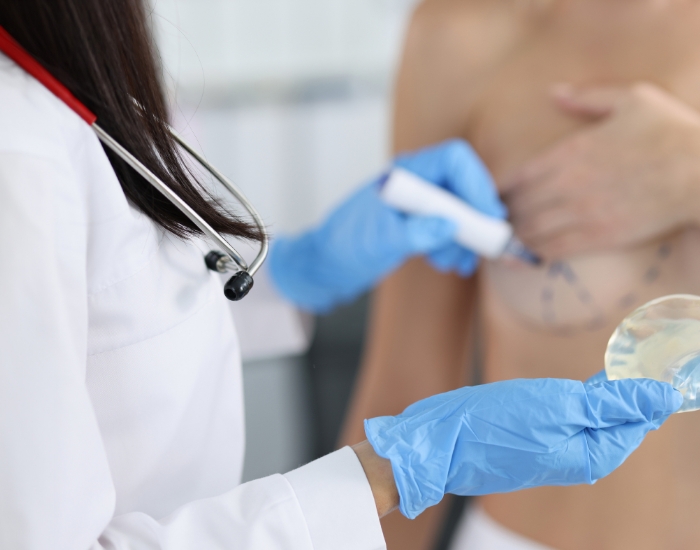
Breast Lift vs. Breast Augmentation vs. Both: How to Choose the Right Procedure
How to tell whether you need breast implants, a breast lift or both, with side-by-side comparisons of results, recovery and risks.

Breast Augmentation Recovery Week by Week: Work, Driving, Sleep, Exercise and Final Results
When you can work, drive, sleep on your side and exercise after breast augmentation, what is normal at each stage, and when implants settle…